

August 2: Summer Month
The Red Rose
The name Aphrodite literally means “born from foam”. When the primary god Ouranos had his male parts chopped off by his son Kronos, they were thrown into the ocean, where they bubbled and fizzled… And out of the foam rose the most beautiful of creatures: Aphrodite. But she was much more than just a pretty face. Albeit mostly called on in matters of the heart, in Sparta for example, she was portrayed in full armour and carried the title of “warlike Aphrodite” (as partner of wargod Ares). The Spartans even held one of her statues in chains, to make sure she would stay put. Aphrodite’s versatility is symbolised by her dedicated flower, the red rose. It was created when the goddess’ lover Adonis died, and her tears mixed with his blood. Like a thorny rose bush, Aphrodite’s beauty had a sting. She was a seductress as well as a mother, a tradwife and an explorer, a comforter and an avenger. As she effortlessly combined all aspects of being a woman, she may well have been the most feminist of all goddesses.
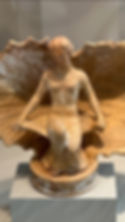
Venus in a shell, Antikensammlung Berlin, Germany

Armed Aphrodite, National Archaeological Museum, Athens, Greece
Did you know?
In Missesmyths’novel “Aphrodite’s Trees”, the goddess of love plays a leading part.
About Aphrodite: cfr. “Gold, Frankincense and Myrrh”, “The Starter Wife”, “The Power of Love”, “Opposites Attract”, “Both Sides Now”, “A Swiftie”, “Body and Soul”, “My Fair Lady”, “The Wishing Well”, “Persuasion”, “Sink or Swim”, “The Delos Doves”, “Pussycats”, “Follow the Sun”, “Happy Accident”, “Venus’ Looking Glass”, “Venus’ Herb”, “The Deer Hunters”, “The Apple of Discord”, “Go with the Flow”, “The Water was Wide”, “A Crowded Mountain”, “Time Flies”, “Spring Fever”, “Too Little, Too Late”, “I, Robot”, “Best of Both”, “Mother of Pearl”, “Crimes of Passion”, “Phobophobia”, “Divine Disorders”, “Not to Last”, “The Last Hero”.
About Ouranos: cfr. “Cheating Mother Nature”.
About Kronos: cfr. “Time Flies”.
In the movie “The Adventures of Baron Munchhausen”, Uma Thurman plays Aphrodite, appearing in a shell.
Pliny (1st cent. journalist) reports a naked statue of Aphrodite at Knidos (now in Turkiye, at the Gulf of Gökova), that was so attractive that admirers kept trying to make love to it.
One of the most used epithets for Aphrodite, the goddess of love, is “Kypria”, as she was supposed to have come ashore on the island of Cyprus. The rock at Paphos, where she first set foot on dry land, is still a well loved tourist attraction.
In English, "rose" is an anagram of "Eros", Aphrodite’ son.