

Birthstones July: Carnelian
The Singer's Stone
Carnelian is derived from the latin “carnis”, meaning flesh. This semi-precious stone has been popular since antiquity. The Egyptians associated it with their sun god Ra, and used it abundantly. Because of their blood red colour, wearing it would work as a general invigorator. Carnelians have always been considered lucky stones, and were coveted talismans throughout the ages. Even the 19th century German poet Goethe wrote about them: “Carnelian is a talisman, it brings good luck to child and man. It drives away all evil things, to thee and thine protection brings.” Carnelians were not exorbitantly expensive, and were commonly used for signet rings, as they’re easy to cut and hot wax doesn’t stick to them. In ancient societies, were the spoken word was of utmost importance, orators would wear a carnelian under their clothes for encouragement. Today, as the “singer’s stone”, it’s still associated with creativity and self-expression, and worn by rather famous artists.

ancient necklace, British Museum, London, UK
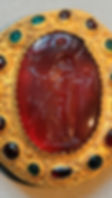
Carnelian intaglio, Ptolemaeic queen, Cabinet des Médailles, Paris, France