

Greek Myths XS: Asklepios-Asclepius vs Hades-Pluto
A Night at the Temple
After Apollo had unalived the mother of his child in a jealous rage, he performed the first cesarean in history to deliver their baby. He entrusted the boy, Asklepios, to the famous centaur Cheiron, to be educated in medicine. Not for the gods, because the “ichor” in their veins made them immortal. But humans could do with some medical science, instead of the unreliable magic of the toe of general Pyrrhus (to cure battlewounds) or a swim in the river Anigros (to cure leprosy). In Asklepios’ temples or “asklepieioi”, sick people spent the night on the floor with non venomous snakes crawling around them, and woke up cured. It didn’t take long though before Hades, king of the underworld, complained to Zeus about Asklepios saving too much lives, with a diminishing influx of dead souls as a result. Now, Zeus wasn’t prepared to share the power over life and death. He unalived Asklepios with a thunderbolt and put him in the sky as the “serpent bearer” or Ophiuchus. That’s one way to deal with the competition.
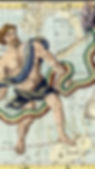
Ophiuchus, John Flamsteed’s Atlas Coelestis

Patients sleeping in the temple of Aesculapius, Ernest Board, Wellcome Collection
Did you know...
Asklepios would have brought back the dead (among whom the father of beautiful Helen, Tyndareus) with a potion based on the blood of Medousa.
According to most myths, Asklepios' mother would have been Koronis, but there's also mentioning of Arsinoe, sister of the Leucippides (who were abducted by Castor and Pollux, cfr. "Double the Energy").
Pliny the Elder (1st cent. AD) mentions the toe of general Pyrrhus: "Some people are born with bodily parts that possess special properties; for example, king Pyrrhus' big toe on his right foot cured an inflamed spleen by touch. The story is told that when he was cremated his big toe would not burn along with the rest of his body; it was put in a chest in a temple."
In Roman times, practicioners of medicine were not held in high regard, but seen as greedy charlatans: “Of the Greek sciences it is only medicine that the Romans have not followed, thanks to their good sense.” (Pliny the Elder, 1st. cent. AD)